Opening a Bank Account in Thailand: Practical Guide for Expats (Bangkok Bank)
by Mario Ferreira | 2026 | Banking & Finances
Opening a bank account in Thailand is one of the first essential steps for any expat settling in the country. It is the indispensable condition for depositing the 800,000 THB required for the retirement visa, receiving a European pension, or simply managing daily life without depending on ATMs.
I opened my account at Bangkok Bank at the Surin branch. This guide brings together everything I wish I had known before going — the exact documents required, pitfalls to avoid, and details you won’t find on the bank’s official website.
⚠️ Requirements vary by branch and city. This guide is based on my experience in Surin. Before travelling, call your local branch or visit once first to confirm their document list.
1. Why Bangkok Bank?
Two banks are particularly recommended by European expats in Thailand: Bangkok Bank and Kasikorn Bank (KBank). Both accept foreigners holding a long-stay visa.
| Bangkok Bank | Kasikorn (KBank) | |
|---|---|---|
| International presence | ✅ Strong (Europe, USA) | Asia mainly |
| Mobile app | Bualuang mBanking | K PLUS (very popular) |
| Opening for expats | ✅ Well established | ✅ Very accessible |
| Retirement visa deposit | ✅ Accepted | ✅ Accepted |
💡 I chose Bangkok Bank for its international presence, which is useful for receiving transfers from Europe. The Surin branch was professional and well organised.
2. Essential Prerequisite: the Long-Stay Visa
This is the most important point in this guide: in recent years, Thai banks no longer open current accounts for foreigners without a long-stay visa. A tourist visa or visa exemption is no longer sufficient.
Accepted visas include:
- Non-Immigrant O-A (retirement visa)
- Non-Immigrant O (spouse of a Thai national)
- Non-Immigrant B (work visa)
- LTR — Long Term Resident
- ED — student visa (depending on branch)
⚠️ If you arrive in Thailand with a tourist visa intending to open an account, plan to obtain the right visa first. This is a non-negotiable step.
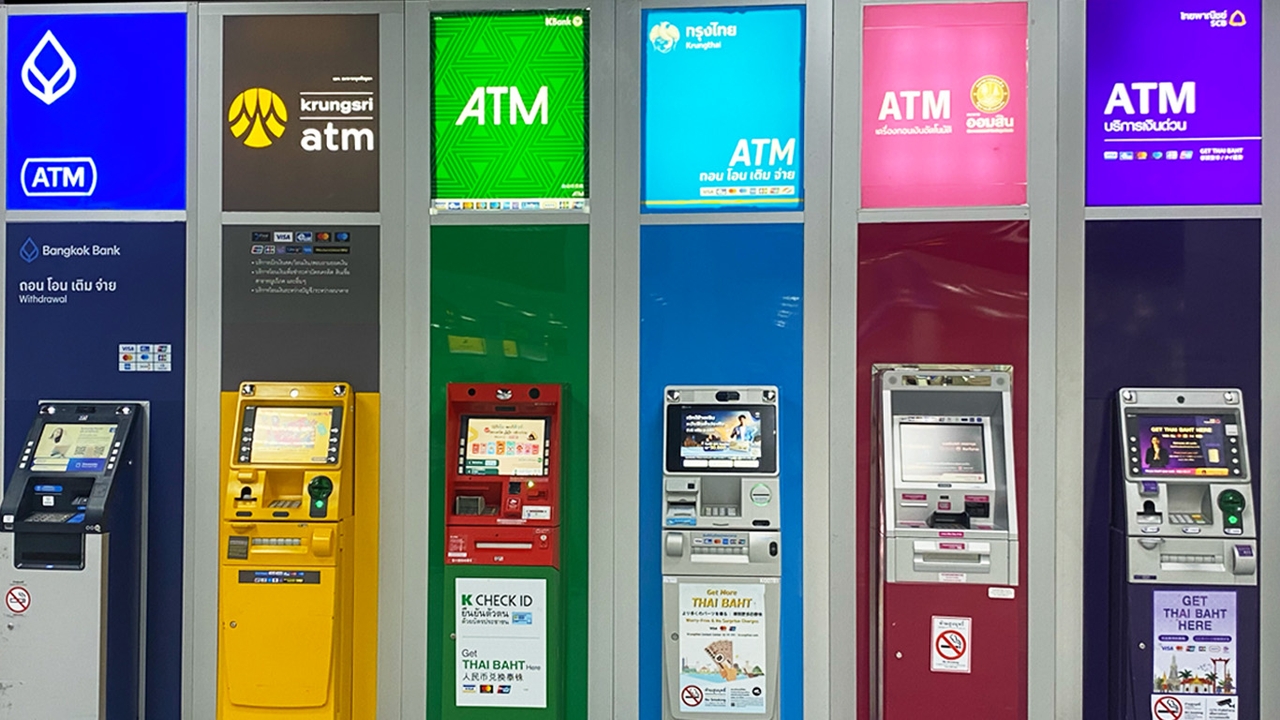
3. Required Documents — The Exact List
Here are the documents requested at the Bangkok Bank branch in Surin. Each document matters — the absence of any one of them can block the account opening.
1. Passport + valid visa
Basic document. Bring the original — a photocopy alone is not sufficient. The bank will photocopy the relevant pages itself (photo, visa, and last entry stamp).
2. Proof of residence — issued by immigration
This is the least known document and often the most surprising for new expats. The bank does not accept a rental contract or an electricity bill; it requires an official document issued by the immigration office.
💡 The key: the TM30. This form — normally completed by your landlord within 24h of your arrival — serves as a residence declaration with immigration. Once registered, you can ask immigration for a residence certificate based on this TM30. This certificate is accepted by banks as official proof.
How to obtain the residence certificate:
- Make sure your TM30 is properly registered (your landlord must have done this)
- Go to the immigration office in your province
- Request a “Certificate of Residence” (or “Residence Certificate”)
- The document is generally issued the same day or within 24h
- Fee: approximately 500 THB
3. Mobile operator certificate
An unexpected document, but systematically requested in Surin: a certificate issued by your mobile operator confirming that you are the registered holder of the phone number in your name.
How to obtain it:
- Go to any branch of your operator (AIS, DTAC, True)
- Present your passport
- Request a certificate confirming ownership of your number
- Issued immediately, generally free
⚠️ Your SIM card must be registered in your name with your passport. In Thailand, biometric SIM registration is mandatory — if you bought a tourist SIM not registered in your name, regularise the situation first.
4. Marriage certificate (if applicable)
If you are married to a Thai national, the bank requires the official marriage certificate. Two documents are accepted depending on your situation, both obtained at the district office (Amphur):
- Kor Ror 2 — if the marriage was contracted in Thailand
- Kor Ror 22 — if the marriage was contracted abroad
💡 The Amphur issues these documents quickly, generally the same day. Bring the original and a photocopy.
4. The Opening Process — Step by Step
- Gather all documents (see list above)
- Go to the Bangkok Bank branch on a weekday, preferably in the morning
- Explain that you wish to open a savings account
- A member of staff checks your documents and makes photocopies
- You fill in the account opening form (assistance available in the branch)
- Initial deposit: generally 500 to 1,000 THB + ATM card fee (~400 THB) — bring around 1,500 THB in cash
- You leave with your bank book (passbook) and debit card
- The Bualuang mBanking mobile app is installed and activated directly in the branch — bring your phone
💡 Allow half a day. In provincial branches like Surin, the wait is moderate and staff are generally patient with foreigners. A few words of Thai always make a good impression.
5. After Opening — What You Need to Know
Receiving transfers from Europe
To receive your pension or transfers from Europe, you will need Bangkok Bank’s SWIFT code: BKKBTHBK. Share this code with your full account number with your European bank.
💳 To avoid conversion fees, use Wise to transfer your euros to baht at the real rate before sending to your Bangkok Bank account. The difference is significant for large amounts, like the 800,000 THB for the retirement visa.
💳 Wise — Transfer your euros to bahts at the real rate — save €20–40 on every €1,000 transfer. → Open a free account
The 800,000 THB deposit for the retirement visa
If you are opening this account for the retirement visa, remember: the 800,000 THB must be present in the account at least 2 months before your extension application. Don’t transfer too early — the money must be there at the right time, not immobilised unnecessarily.
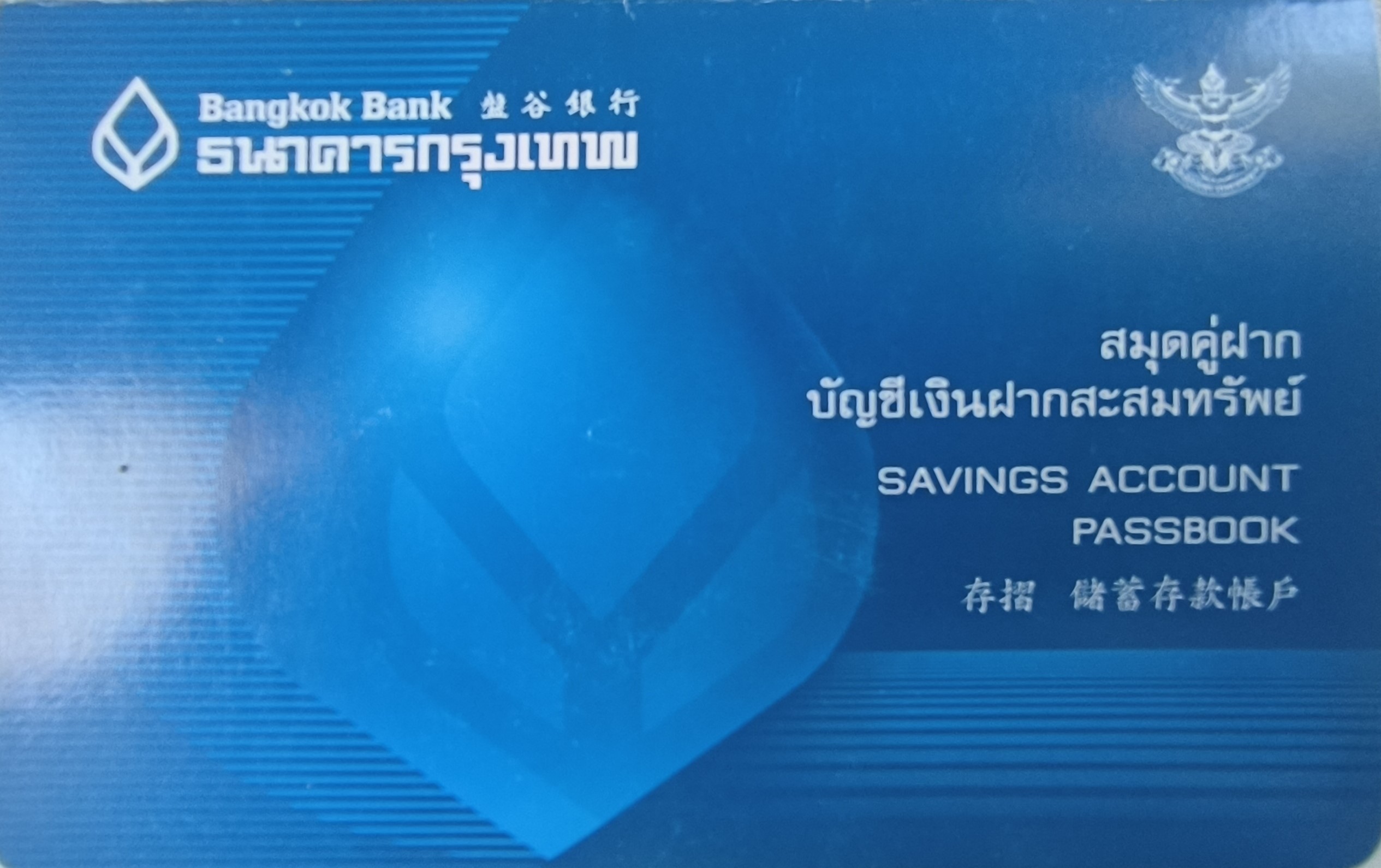
The bank book (passbook)
Unlike in Europe, Thai banks still issue a physical passbook. The immigration office will ask you to present the updated passbook when renewing your visa, with photocopies of all pages. At renewal time, photocopy the entire passbook and bring the original.
⛔ Critical point: Bangkok Bank ATMs only display the last 3 months of transactions. If you don’t update the passbook at least once per quarter, missing transactions will no longer be accessible via the machines. In that case, you will need to request an official statement from the bank, which must submit a request to the head office in Bangkok. Timeframe: about one week. And it costs money. Update the passbook every 3 months without exception — it is a golden rule.
6. FAQ — Frequently Asked Questions
Can I open an account online without visiting?
No. Opening an account for foreigners must be done in a branch, in physical presence, with original documents.
Is an interpreter necessary?
In larger urban branches (Surin, Chiang Mai, Bangkok), staff generally speak functional English. In rural areas, bring a Thai companion if you don’t speak Thai.
How long does the opening take?
Allow 1 to 2 hours if all your documents are in order. The debit card is issued the same day or within the following days, depending on the branch.
Can I have a Euro account?
Bangkok Bank offers foreign currency accounts (Foreign Currency Deposit) in certain branches. These accounts are useful for avoiding immediate conversion when receiving transfers. Ask directly in the branch.
What happens if my visa expires?
The account remains open, but some features may be limited. Renew your visa before it expires and inform the bank if necessary.
In Summary
Opening an account at Bangkok Bank in Thailand is entirely accessible for a well-prepared expat. The key: having the right visa and above all not underestimating the administrative documents — in particular the residence certificate issued by immigration (based on the TM30) and the mobile operator certificate. These are the two documents that most surprise new arrivals.
Once your account is open, you are ready for the next steps: depositing the capital for the retirement visa, receiving your European pension, and managing your daily life in Thailand with peace of mind.
— Mário Ferreira | Surin, Isaan, Thailand
💬 Have you opened an account in Thailand? Share your experience in the comments!
📌 Also read: Thailand Retirement Visa 2026 and our Cost of Living guide for Isaan.