SIM Card & Internet in Thailand
In a small village surrounded by rice fields in Surin province, with buffaloes grazing nearby, I have three operators competing to offer me 1 Gbps fibre optic internet. That might be the best possible introduction to connectivity in Thailand: the country will surprise you, and not just in the big cities.
This guide covers everything you need to know — from the tourist SIM you buy at the airport to home fibre for long-term residents.
The Tourist SIM: As Soon As You Land
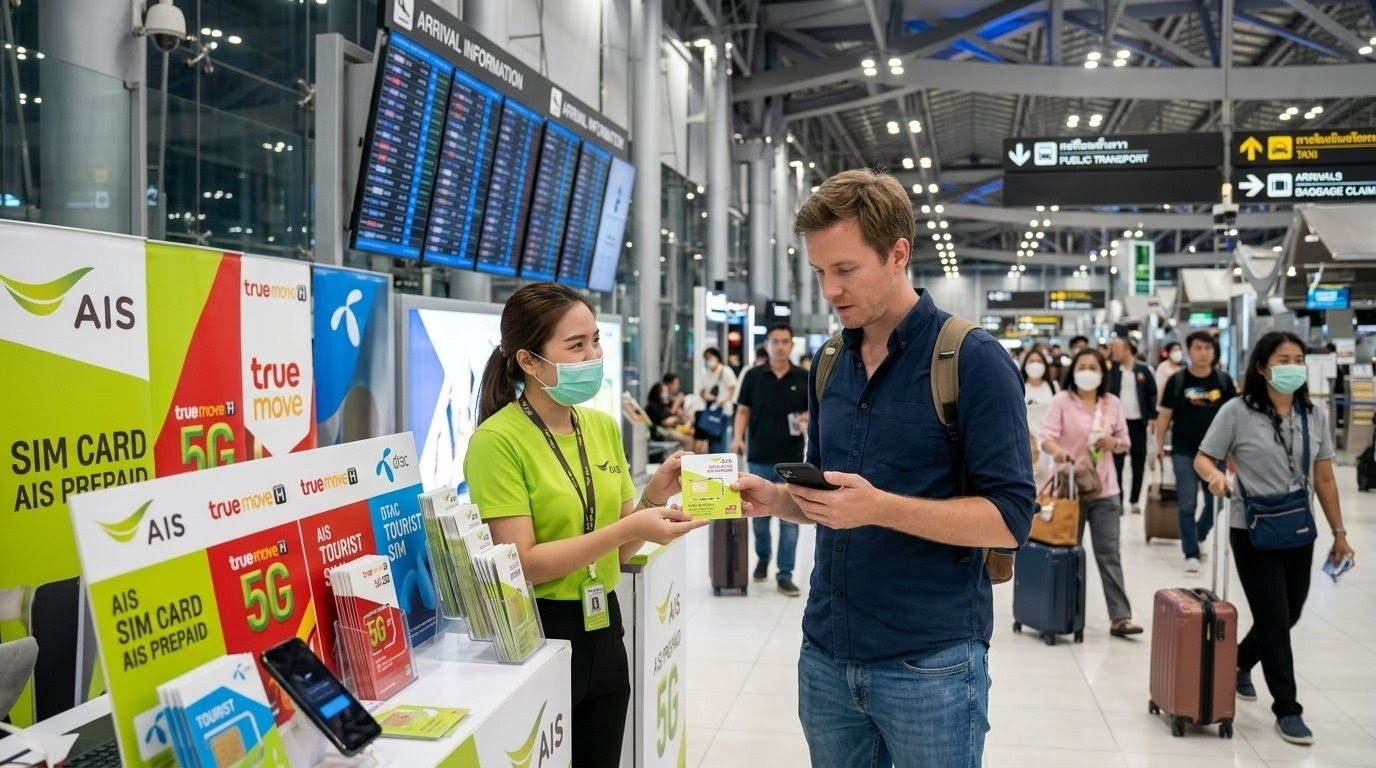
The first thing to do after collecting your baggage at Suvarnabhumi or Don Mueang: buy a local SIM. Forget international roaming — the rates are extortionate. A Thai SIM costs a fraction of the price and delivers far better coverage.
Where to Buy?
The three major operators — AIS, TrueMove H, and DTAC (now merged with True) — all have counters in both Bangkok international airports, right in the arrivals area. You can’t miss them.
Inside the country, every major city has shops in shopping centres. In Surin, for example, you’ll find representatives from all three operators at the Robinson Department Store.
The Purchase Process
Simple and quick. You need:
- Your passport (required by Thai law)
- The vendor makes a photocopy on the spot
- Takes 5 to 10 minutes, no more
Tourist Plans in 2025-2026
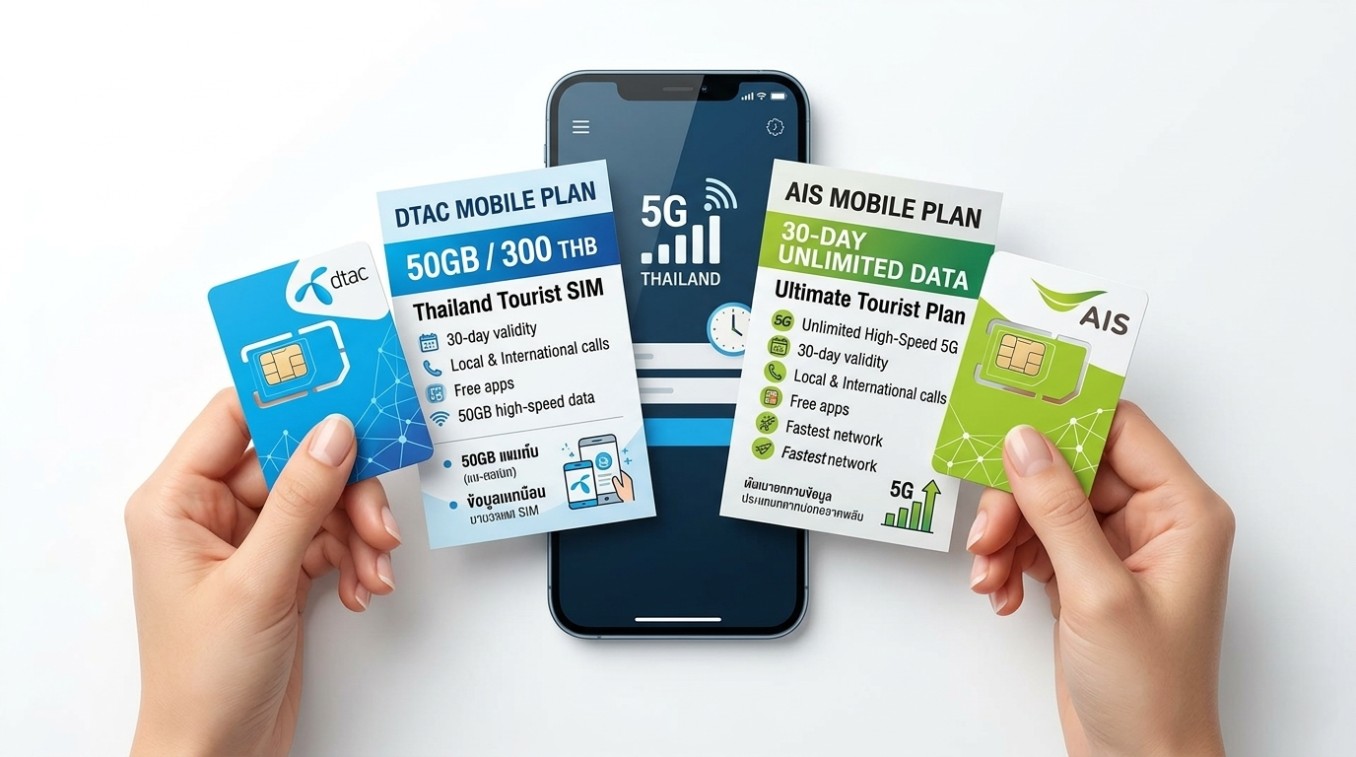
DTAC / True (merged network) — Happy Tourist SIM:
- 8 days, unlimited 5G/4G data: 449 THB
- 10 days, 50 GB max speed: 349 THB
- 15 days, unlimited 5G/4G data: 699 THB
- 30 days, unlimited 5G/4G data: 1,199 THB
AIS — Tourist SIM:
- 15 days, unlimited 5G/4G data: 699 THB
- 30 days, unlimited 5G/4G data: 1,199 THB
Prices are indicative and may vary depending on current promotions.
My Personal Experience
I used a DTAC tourist SIM when I first moved to Thailand. No issues at all: the process is straightforward, and the coverage is excellent even in rural Isaan. For a short visit, it’s the ideal solution.
Monthly Prepaid SIM for Residents
Once settled in, the most flexible mobile solution for long-term residents is a monthly prepaid plan. I personally use DTAC (now on the True network) with a rechargeable prepaid plan.
What I Actually Use
The DTAC system separates data and voice calls — you subscribe to each package independently, which is different from the all-in-one plans common in Europe. Here’s my usual combination:
| Package | Details | Price |
|---|---|---|
| Data | 50 GB at 20 Mbps + unlimited dtac WiFi, 30 days | 299 THB |
| Calls | 120 minutes to any network, 30 days | 60 THB |
| Total | 359 THB/month |
That’s less than €10 per month for data and calls. A postpaid contract might work out slightly cheaper — but I’m happy to pay a little more for total freedom. A month with no calls? I skip the voice package. An extended trip abroad? I simply don’t renew. No contract, no cancellation fees, no bill surprises. For an expat whose situation can change, that flexibility is worth a few extra baht.
Advantages of Prepaid
- No commitment
- Top up at any 7-Eleven, Family Mart, or via the operator’s app
- Packages adjustable month by month
- Ideal if you travel frequently or spend several months abroad
How to Top Up?
Top-ups are available everywhere: 7-Eleven, True Shop, the operator’s mobile app, or via USSD codes. You can also subscribe to monthly data packages directly from your phone.

Fibre Optic: Thailand’s Pleasant Surprise
Here’s what surprises almost every Western expat: fibre optic internet in Thailand is fast, reliable, and remarkably affordable — even in remote rural areas.
My Setup in Na Di (Surin Province)
I live in a small village surrounded by rice paddies and buffaloes. Not exactly the profile of a hyper-connected location. And yet: three different operators, each with their own fibre optic network, came to my door to offer their services.
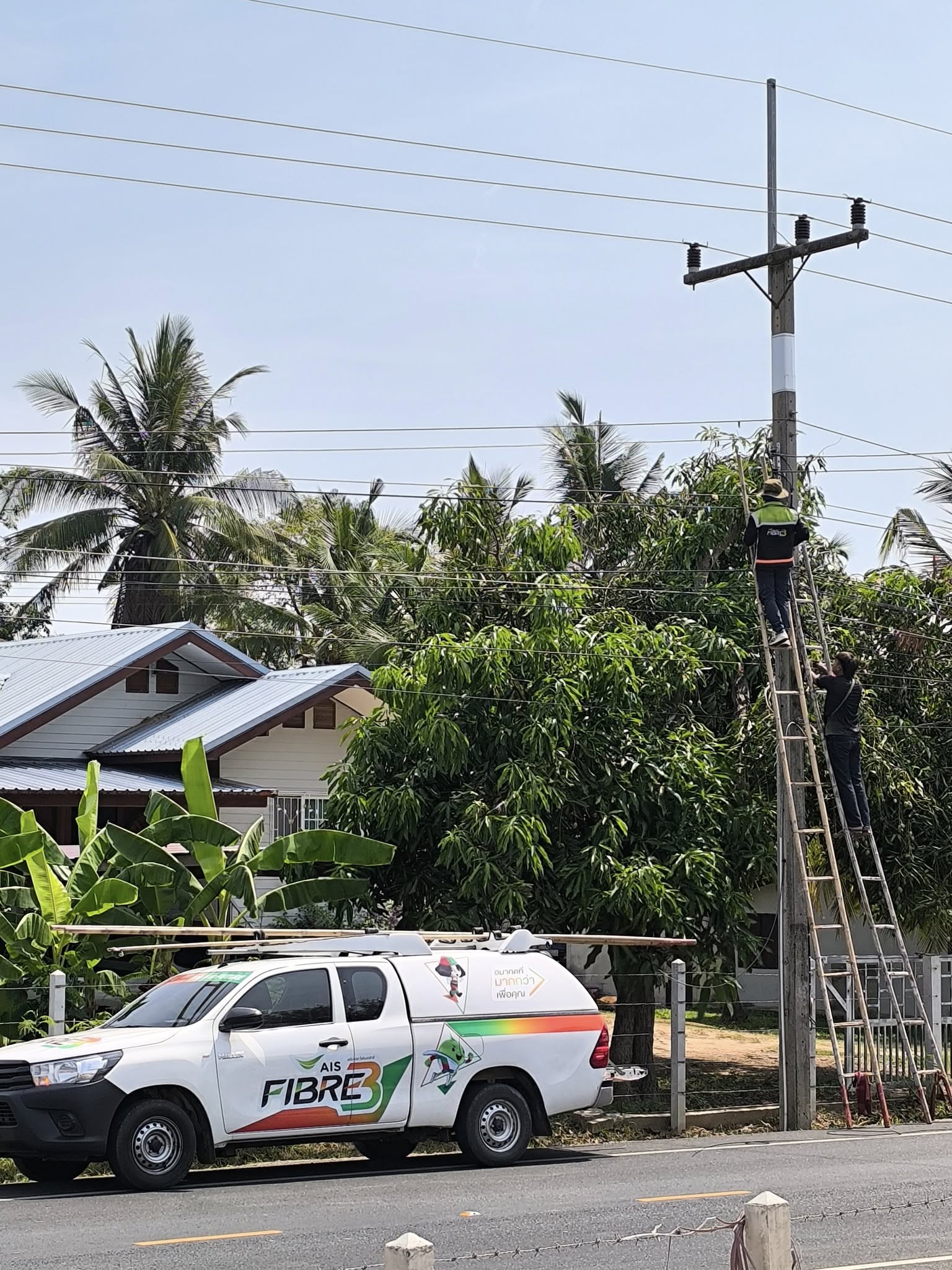
I chose AIS Fibre, and here’s what I get for 899 THB per month:
- Symmetrical fibre optic connection: 1 Gbps / 1 Gbps (upload and download)
- Unlimited data
- A TV package with around 80 channels
- A SIM card with 20 GB of mobile data per month
- Free installation and equipment
- 24-month contract
For context: 899 THB is roughly €24 or $26. For a symmetrical 1 Gbps connection. Unlimited.
Other Available Plans
Fibre optic packages start at around 500 THB per month for lower speeds. The three main operators offer home fibre packages:
- AIS Fibre — the market leader, with coverage extending into rural areas
- True Online — born from the True/DTAC merger, strong urban and suburban coverage
- NT (National Telecom, formerly TOT) — the state operator, often present where private networks don’t reach
Prices and availability vary by area. In cities and suburban areas, the offer is even more competitive.
Is a 24-Month Commitment Worth It?
That’s the main downside of high-speed fibre plans in Thailand: a 24-month contract is almost universal for the best rates. If you’re on an annually renewable retirement visa and plan to stay long-term, it’s a no-brainer. If your situation is uncertain, opt for a shorter contract with a lower speed.
Quick Comparison: Which Solution for You?
| Profile | Recommended Solution |
|---|---|
| Short-stay tourist (< 30 days) | DTAC/True or AIS tourist SIM |
| Resident without fibre access | Monthly prepaid SIM |
| Resident with fibre available | AIS/True fibre + prepaid SIM |
| Digital nomad on the move | Prepaid SIM + monthly data package |
Conclusion
Thailand is — rightly — considered one of the best countries in the world for mobile and fixed-line connectivity, and it’s not just marketing talk. From my Isaan village, I work online with a symmetrical 1 Gbps connection for less than €25 a month. If that’s not an argument for moving here…
Prices mentioned are current as of early 2026. Always check current rates with the operators directly.
— Mário Ferreira | Surin, Isaan, Tailandia